
Ending a marriage often means dividing more than just memories; untangling finances can feel like navigating a minefield, with fears of future claims looming long after the papers are signed. Do you worry about ongoing financial obligations to your ex-spouse, preventing a truly fresh start?
What if there was a way to draw a definitive line in the sand, ensuring both of you can genuinely move forward independently without looking back financially? This is precisely where understanding what a clean break order is becomes essential.
Join us as we explore how this important legal arrangement works within the Singapore Divorce process and find out if it’s the right step towards securing your independent financial future.
What Is A Clean Break Order?
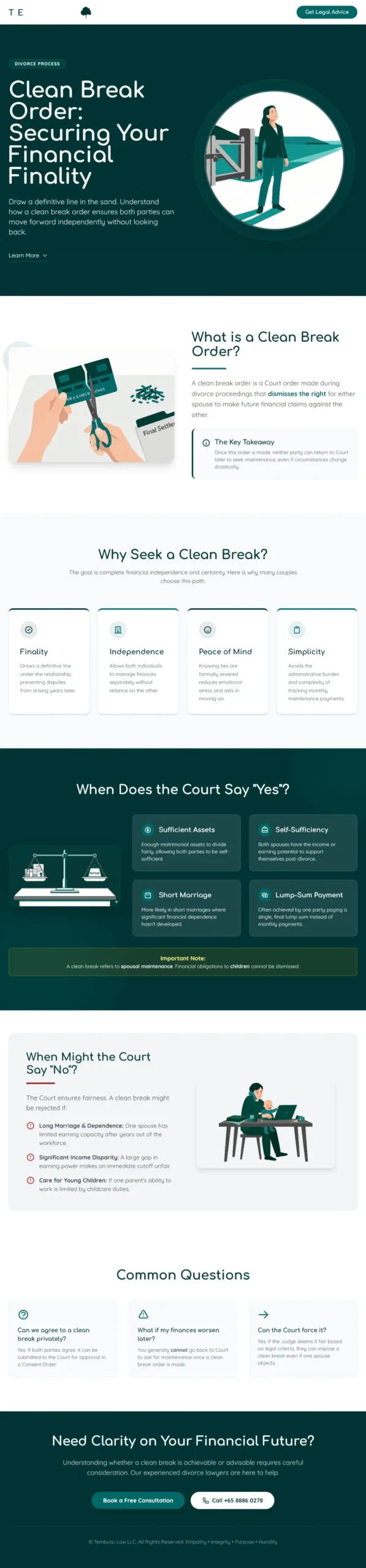
A clean break order is a type of Court order made during Divorce proceedings that dismisses the right for either spouse to make future financial claims against the other, particularly regarding spousal maintenance. Essentially, it creates a final financial separation.
Once a clean-break financial order is made, neither party can return to Court later to seek maintenance from their former spouse, even if their circumstances change significantly.
Why Seek A Clean Break Order In A Divorce?

The main goal of a clean-break divorce is to achieve complete financial independence and certainty for both parties. It provides several benefits:
- Finality: It draws a line under the financial relationship, preventing future disputes or claims for spousal maintenance that could arise years down the line.
- Independence: Allows both individuals to manage their finances separately without ongoing obligations to, or reliance on, the other.
- Peace of Mind: Knowing that financial ties are formally severed can reduce emotional stress and allow former spouses to move on with their lives more easily.
- Simplicity: Avoids the potential complexities and administrative burden of ongoing maintenance payments.
When is a Clean Break Order Appropriate?
A clean break order isn’t suitable for every situation. The Court will only grant one if it’s fair and appropriate given the specific circumstances of the marriage and Divorce. Factors that make a clean break more likely include:
- Sufficient Assets: There are enough matrimonial assets to be divided fairly, allowing both parties to become self-sufficient without needing ongoing support from the other.
- Both Parties are Self-Sufficient: Both spouses have the capacity (through income, earning potential, or assets received in the settlement) to support themselves financially after the Divorce.
- Shorter Marriages: Often considered more appropriate after shorter marriages, where spouses may not have developed significant financial dependence on each other.
- No Young Children (Regarding Spousal Maintenance): While a clean break typically refers to spousal maintenance, it’s vital to note that financial obligations towards children cannot be dismissed. Child maintenance is a separate matter and continues until the child reaches adulthood or completes their education, regardless of a clean break between the parents.
- Lump-Sum Maintenance: Sometimes, a clean break is achieved by one party paying a single, final lump sum of maintenance to the other, instead of ongoing periodic payments. This capitalises the maintenance obligation into one payment, finalising that aspect.
When Might a Clean Break Order NOT Be Appropriate?

Conversely, the Court might decide against a clean break if:
- Long Marriage with Significant Dependence: One spouse, often after a long marriage, has limited earning capacity (perhaps having been out of the workforce to raise children) and requires ongoing support.
- Significant Income Disparity: There’s a large gap in the spouses’ earning capacities, making it unfair to immediately cut off potential support for the lower-earning spouse.
- Young Children Requiring Care: If one parent’s ability to work is significantly limited due to caring for very young children.
Conclusion About A Clean Break Order
A clean break order offers a path to complete financial separation after Divorce, providing certainty and allowing both individuals to start afresh.
However, it’s essential to ensure this arrangement is fair and suitable for your specific situation, especially considering long-term financial security. Understanding whether a clean break is achievable or advisable requires careful consideration of assets, income, and future needs.
For expert advice on navigating financial settlements in Divorce, including the possibility of a clean break, consulting experienced legal professionals like the team at Tembusu Law, known among the best Divorce lawyers in Singapore and also proficient in complex criminal law matters, is highly recommended.
Contact us today for a free discovery call!
Frequently Asked Questions About A Clean Break Order
Does A Clean Break Order Affect Child Maintenance?
No, a clean break order only relates to spousal maintenance claims between the former spouses. Financial obligations towards children continue and cannot be dismissed by such an order.
Can You Get A Clean Break Order If You Agree With Your Ex-Spouse?
Yes, if both parties agree to a clean break as part of their overall financial settlement, they can submit this agreement to the Court for approval in a draft Consent Order.
What Happens If My Financial Situation Worsens After A Clean Break Order?
Generally, you cannot go back to Court to ask your former spouse for maintenance once a clean break financial order is in place, even if your circumstances change unexpectedly (like job loss or illness).
Is A Lump Sum Maintenance Payment The Same As A Clean Break Order?
Paying or receiving lump-sum spousal maintenance is often part of achieving a clean break. It finalises the maintenance obligation in one go, facilitating the clean break. The order itself formally dismisses future claims.
Can The Court Force A Clean Break Order If One Party Disagrees?
Yes, if the Judge assesses the financial situation and believes a clean break is fair and appropriate for both parties based on the legal criteria, the Court can impose a clean break order even if one spouse objects.
Is A Clean Break Order Common In Singapore?
Clean breaks are considered by the Court when appropriate, often in cases with sufficient assets for division, shorter marriages, or where both parties have clear paths to self-sufficiency. They are less common in long marriages with significant financial disparity.