
You’re building a life together in Singapore, maybe buying that dream condo or sharing daily expenses, but marriage isn’t on the cards right now. It’s exciting, but have you considered the ‘what ifs’? If things change, how are assets divided? Who gets the sofa, let alone the apartment?
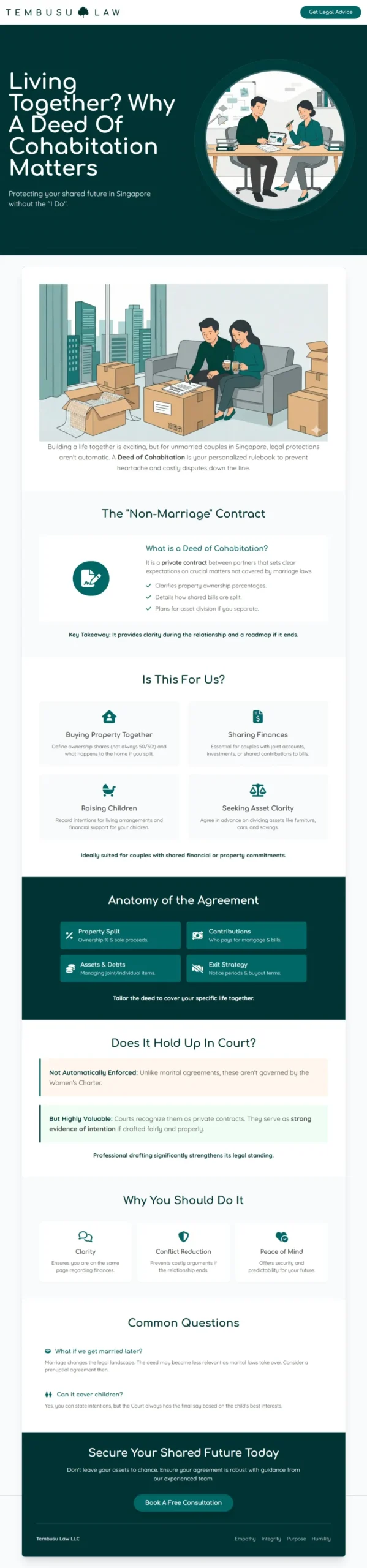
For unmarried couples, the law doesn’t offer the same automatic protections as it does for spouses. Avoid potential heartache and costly disputes down the line by setting clear expectations now with a Deed of Cohabitation.
Read on to understand how this simple agreement can save you significant trouble.
What Exactly Is a Deed of Cohabitation?
Imagine a Deed of Cohabitation as a personalised rulebook or a formal agreement tailored to unmarried couples sharing a life and home in Singapore. It’s not bound by marriage laws but functions as a private contract between the two partners.
This document clearly lays out your mutual understanding of crucial matters, such as who owns what percentage of the property you bought together, how shared bills are split, and what happens to joint savings if you decide to go your separate ways. It’s a practical tool to put your intentions regarding finances and assets in writing, providing clarity during the relationship and a clear plan if it ends.
Who Might Need a Deed of Cohabitation?

This type of agreement is particularly useful for unmarried couples who:
- Are buying property together: This is perhaps the most common reason. The deed can clearly state ownership shares (it doesn’t have to be 50/50!) and what happens to the property if you separate.
- Share significant financial responsibilities: If you have joint bank accounts, investments, or regularly contribute to shared bills and expenses, a deed can outline these arrangements.
- Have children together: While child custody and maintenance are ultimately decided by the Court based on the child’s best interests, the deed can record your agreed intentions regarding the children’s living arrangements and financial support.
- Want clarity on asset division upon separation: It lets you agree in advance on how assets acquired during the relationship (like furniture, cars, or savings) should be divided if you part ways.
What Can You Include in the Agreement?
A Deed of Cohabitation can be tailored to your specific situation, but common areas covered include:
- Property Ownership: Specifying the percentage each partner owns in a shared property and how proceeds would be split if sold.
- Financial Contributions: Outlining how household bills, mortgage payments, and other joint expenses are shared.
- Assets and Debts: Listing individual and joint assets or debts and agreeing on how they would be managed upon separation.
- Children: Recording intentions for children’s living arrangements and financial provisions (though Court orders take precedence).
- Separation Terms: Agreeing on notice periods if one partner wishes to end the cohabitation, or terms for one partner buying out the other’s share in a property.
Is a Deed of Cohabitation Legally Binding in Singapore?
This is an important point. Unlike prenuptial or postnuptial agreements for married couples, Deeds of Cohabitation are not specifically governed under Singapore’s Divorce laws in the Women’s Charter. The Court doesn’t automatically enforce them in the same way it might enforce marital agreements during a Divorce.
However, that doesn’t mean they are useless. A well-drafted Deed of Cohabitation can be recognised and considered by the Singapore Court as a private contract between two individuals. If a dispute arises, the Court may consider the deed strong evidence of the couple’s intentions and agreements made when they were on good terms.
Its enforceability often depends on standard contract law principles, such as duress, misrepresentation, or fundamental unfairness. Having it properly drafted by a lawyer significantly strengthens its potential standing.
Benefits of Having a Deed

- Clarity and Understanding: It ensures both partners are on the same page regarding important financial and property matters.
- Reduced Potential for Disputes: Having arrangements clearly documented can prevent lengthy, costly arguments if the relationship breaks down.
- Evidence of Intention: Provides clear evidence to the Court or relevant parties about your agreements.
- Peace of Mind: Offers security and predictability for both partners.
Conclusion About The Deed Of Cohabitation In Singapore
Ultimately, a Deed of Cohabitation offers unmarried couples in Singapore a practical, proactive way to navigate their shared lives with greater clarity and security. It encourages vital conversations about finances and property early on and provides a clear roadmap, potentially saving considerable stress and expense if circumstances change.
For advice tailored precisely to your unique situation and to ensure your agreement is robust, consider seeking guidance from experienced legal professionals. The team at Tembusu Law, known for having some of the best criminal lawyers in Singapore and top expertise recognised even among the best Divorce lawyers in Singapore circles.
Contact us today for a free discovery call.
Frequently Asked Questions About The Deed Of Cohabitation In Singapore
Is a Deed of Cohabitation Legally Binding in Singapore?
It’s not automatically enforced like marital agreements under Divorce law. However, the Singapore Court can recognise it as a private contract and consider it strong evidence of the couple’s intentions, provided it was drafted fairly and properly in accordance with contract law principles.
What Happens if We Get Married Later?
Marriage typically changes the legal landscape. Upon marriage, the terms of the Deed of Cohabitation may become less relevant, as marital laws (such as the Women’s Charter) generally govern asset division in the event of a Divorce. You might consider a prenuptial agreement before marrying.
Can it Cover Arrangements for Children?
Yes, you can state your intentions regarding children’s living arrangements, care, and financial support. However, final decisions on custody, care and control, and access always rest with the Court, which prioritises the child’s best interests above any parental agreement.
How is it Different from a Prenuptial Agreement?
A prenuptial agreement (“prenup”) is made before marriage in contemplation of it, outlining asset division if the marriage ends in Divorce. A Deed of Cohabitation is for couples not planning to marry or who haven’t married yet, focusing on their arrangements while living together unmarried.